How to size a home solar PV system in Poland and how many panels you need
Updated: 19/11/2026 · 6 min read · Ozeplan editorial team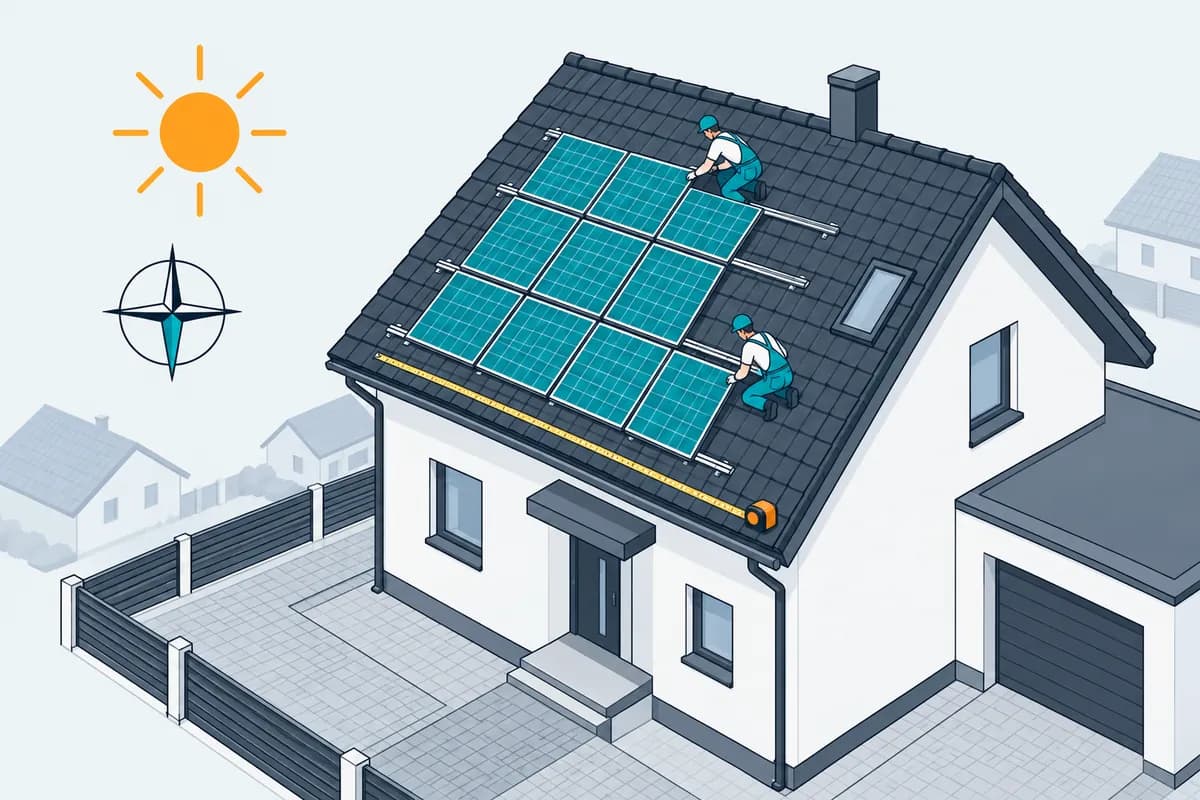
A solar PV system is sized to the household's annual electricity use, not to the roof area. According to the European Commission's PVGIS tool, a 1 kWp system facing south at a 35° tilt produces from about 1,005 to 1,090 kWh a year in Polish cities, and about 20% less when facing east. With annual use of 4,000 kWh and a yield of 1,050 kWh per kWp, the required size is about 3.8 kWp, which equals eight 480 Wp modules.
How much energy 1 kWp produces in Poland
Annual yield of a 1 kWp system according to PVGIS: PVGIS-SARAH3 database for 2005 to 2023, 14% system losses, 35° module tilt. Calculated on 19 November 2026.
The yield varies over the year. In Warsaw a 1 kWp system facing south produces about 25 kWh in December and about 135 kWh in June according to PVGIS. The summer surplus is exported to the grid and settled under net-billing.
The yield of a given system depends on shading, roof tilt and orientation, and the efficiency of the equipment. The solar calculator computes it for a chosen location from PVGIS data.
How to convert electricity use into system size
Read your annual electricity use from the supplier's bills, preferably for the last two years.
Add planned changes in use, for example a heat pump, an electric car or air conditioning.
Divide the annual use by the yield of 1 kWp for your location and roof orientation. The result is the approximate system size in kWp.
Divide the system size by the power of one module to get the number of panels.
Worked example: annual use of 4,000 kWh and a yield of 1,050 kWh per kWp give about 3.8 kWp. With 480 Wp modules this means eight panels with a total of 3.84 kWp.
According to the Polish Energy Regulatory Office (URE), the average annual use of a household on the G11 tariff is 1.8 MWh. A house heated by a heat pump uses considerably more, as described in heat pumps for houses.
A system larger than your use
Under net-billing, exported energy is valued at the market price and its value goes to a prosumer deposit, which pays for energy drawn from the grid. The unused part of the deposit is refunded only in part. A system much larger than the use therefore produces surpluses worth less than energy used on site.
A larger system is justified when use will grow within a few years, for example after a heat pump is installed, or when the system works with a battery. See home energy storage.
Roof area and panel layout
A 480 Wp module usually takes up about 2 m², so a 4 kWp system needs about 17 m² of roof, not counting the clearance from the roof edges.
An east-west roof gives a lower yield than a south-facing one but spreads production over the morning and afternoon, which can raise self-consumption. Panels shaded by a chimney or trees lower the yield of the whole module string unless the system has power optimisers or microinverters.
Above 6.5 kW the system design must be agreed with a fire-safety expert. The rules are described in permits and regulations.
Frequently asked questions
How many panels do I need for 4,000 kWh a year?
With a yield of 1,050 kWh per kWp the required size is about 3.8 kWp, which equals eight 480 Wp modules. The exact number depends on the location, orientation and tilt of the roof.
How much energy does a 10 kWp system produce?
According to PVGIS a 10 kWp system facing south produces from about 10,050 to 10,900 kWh a year in Polish cities. With an east-facing roof the yield is about 20% lower.
Is an east-west roof suitable for solar PV?
Yes. It gives less energy than a south-facing roof, but production is spread over the morning and afternoon, which supports self-consumption.
Should the system be larger than the annual use?
Usually not. Under net-billing surpluses are valued at the market price and the unused deposit is refunded only in part. A larger size is justified by planned growth in use or by a battery.
Sources
Regulations and programmes checked on the update date.
See installers who travel to your town: range, availability, projects and checked certificates.
Related guides
This guide is for information only. Regulations and programme terms change, so check the current sources before deciding.