Heat pumps for houses in Poland: types, sizing and formalities
Updated: 19/11/2026 · 7 min read · Ozeplan editorial team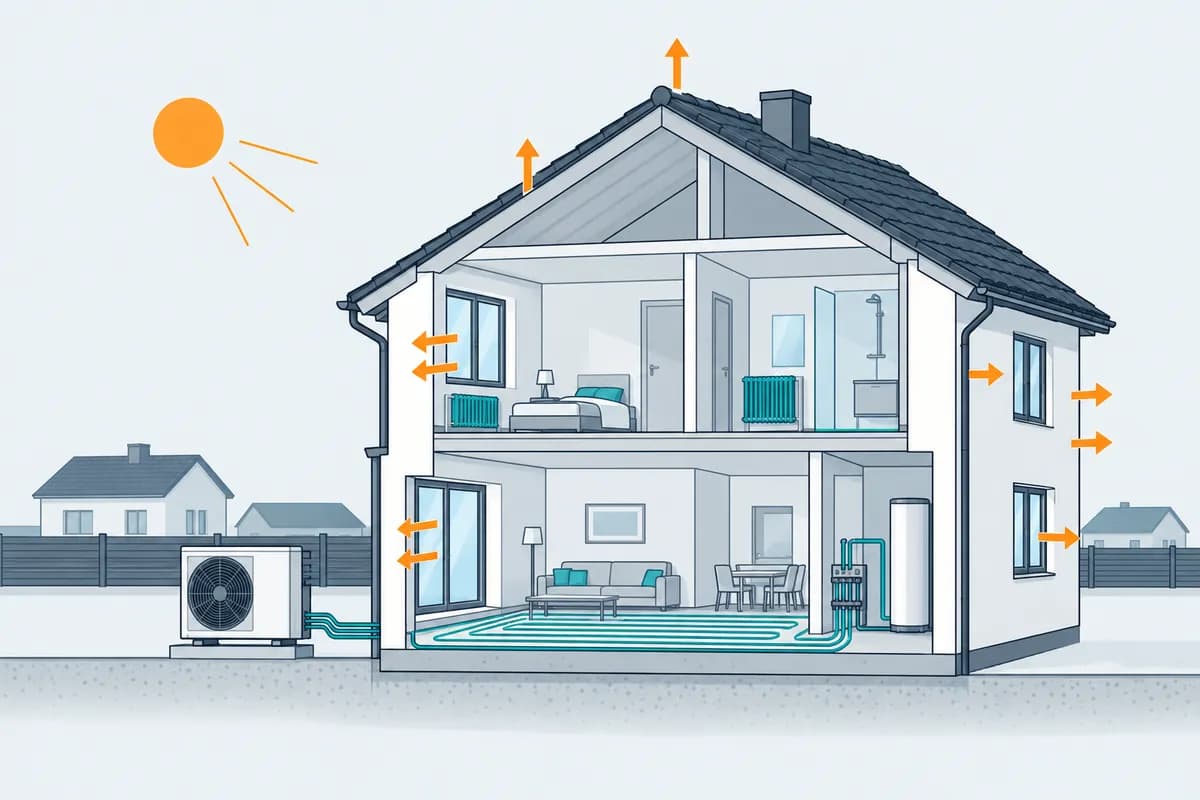
A heat pump is sized to the building's design heat load, calculated under the PN-EN 12831-1 standard, and to the flow temperature of the heating system. The lower the flow temperature, the higher the seasonal efficiency, which is why underfloor heating suits a heat pump well. Installing a heat pump in Poland needs neither a building permit nor a notification. From 1 January 2027, monobloc heat pumps and air-to-water split heat pumps of up to 12 kW that contain refrigerants with a GWP of 150 or more may no longer be placed on the EU market. The ban does not affect units already installed.
Types of heat pumps used in houses
An air-to-water heat pump takes heat from outdoor air and passes it to the heating system and the hot water cylinder. It needs no earthworks.
An air-to-water monobloc keeps the whole refrigerant circuit in the outdoor unit, charged at the factory. Only water pipes run into the building.
An air-to-water split consists of an outdoor and an indoor unit connected by refrigerant lines. Connecting the units involves work on the refrigerant circuit.
A ground-source heat pump takes heat from the ground through a horizontal collector or vertical boreholes. Its heat source has a more stable temperature, but it requires earthworks or drilling.
An air-to-air heat pump heats room air and does not supply a water system. It does not prepare domestic hot water without an additional device.
How to size a heat pump
Sizing starts from the building's design heat load: the output needed to keep the indoor temperature at the design outdoor temperature of the climate zone where the house stands. The heating designer calculates it under PN-EN 12831-1 from the external walls, windows, ventilation and location of the building.
Estimating the output from floor area alone leads to errors in both directions. An oversized unit switches on and off more often, which lowers its efficiency and service life. An undersized unit relies more on its electric heater, which turns 1 kWh of electricity into 1 kWh of heat, while the compressor turns the same electricity into several kWh of heat.
For reliable sizing the contractor needs the following information:
the building design or a description of external walls, windows and doors;
the annual fuel use so far, which the designer converts into heat demand;
the type of heating system: underfloor heating, radiators or both;
the number of occupants and the expected use of domestic hot water.
If the house is being insulated, the heat pump is sized to the building after the works. Under the Czyste Powietrze programme the scope of works follows from an energy audit, as described in heat pump subsidies.
Flow temperature and efficiency classes
Seasonal efficiency is described by the SCOP: the ratio of heat delivered to the building to the electricity used over the heating season. The class on the energy label reflects seasonal space heating efficiency, determined for a low-temperature application (35°C) and a medium-temperature application (55°C). The label and the class scale are set by Commission Delegated Regulation (EU) No 811/2013.
The same unit is more efficient at a lower flow temperature. Underfloor heating usually works at low temperature, while radiators often need a higher one. When a boiler is replaced in a house with radiators, the designer checks whether the radiators deliver enough heat at the lower temperature and, if necessary, proposes replacing some of them.
The Czyste Powietrze programme requires a subsidised heat pump to have at least class A++ for space heating and to be entered on the list of green devices and materials (ZUM).
How to estimate electricity use
Annual electricity use can be estimated by dividing the building's annual heat demand by the SCOP at the expected flow temperature. The result depends on the actual settings and usage, so it serves for a first comparison of options.
Worked example: a building that needs 15,000 kWh of heat a year and a heat pump with a SCOP of 3.5 use about 4,300 kWh of electricity a year.
A heat pump raises the household's annual electricity use, which matters when sizing a solar PV system. See how to size solar PV.
Outdoor unit location and noise
The outdoor unit of an air-to-water heat pump runs a fan, so its position takes into account bedroom windows and the plot boundary. In areas of detached housing, the Polish noise limit for sources other than roads and railways is 50 dB during the day and 40 dB at night, as set by the regulation of the Minister of the Environment on permissible environmental noise levels.
The manufacturer states the sound power level of the unit and the minimum installation clearances in its documentation. The unit is not installed in enclosed recesses that restrict air flow.
Formalities and regulations
Installing a heat pump needs neither a building permit nor a notification (Article 29(4)(3)(c) of the Polish Building Law as amended by the act of 4 December 2025).
Boreholes for a ground-source heat pump are made by a drilling company, which prepares the documents required by the Polish Geological and Mining Law.
Work on a refrigerant circuit containing fluorinated greenhouse gases, for example connecting the units of a split heat pump, is carried out by a person holding an F-gas certificate.
From 1 January 2027, monobloc heat pumps of up to 12 kW and air-to-water split heat pumps of up to 12 kW that contain fluorinated gases with a GWP of 150 or more may no longer be placed on the EU market (Annex IV to Regulation (EU) 2024/573). The restriction does not affect units already installed.
Before signing a contract, ask the contractor for the refrigerant used in the offered unit and, if you plan to apply for a subsidy, for confirmation that the unit is on the ZUM list.
Frequently asked questions
Can a heat pump be sized from the house's floor area?
No. The output is matched to the building's design heat load, calculated under PN-EN 12831-1. Two houses of the same size can have different heat demand depending on insulation, windows and ventilation.
Does installing a heat pump need a building permit?
No. Installing a heat pump needs neither a building permit nor a notification. Boreholes for a ground-source heat pump are subject to the Geological and Mining Law.
Does a heat pump work with radiators?
Yes, if the radiators deliver enough heat at a flow temperature at which the heat pump works efficiently. The designer checks this room by room and, if necessary, proposes replacing some radiators.
What changes for heat pumps from 2027?
From 1 January 2027, monoblocs and air-to-water splits of up to 12 kW with refrigerants of GWP 150 or more may no longer be placed on the EU market. Units already installed may keep operating.
Sources
Regulations and programmes checked on the update date.
See installers who travel to your town: range, availability, projects and checked certificates.
Related guides
This guide is for information only. Regulations and programme terms change, so check the current sources before deciding.